Enterprise scale meets consumer-grade experience.
I lead design at the intersection of strategy, product, and execution. My work is grounded in a simple belief: great design is not an artifact. It’s an operating system for how organizations think, decide, and deliver.
Over the last two decades, I’ve built and led large, multidisciplinary design organizations inside complex enterprises and high-growth environments. I’ve worked across cloud platforms, developer ecosystems, learning products, and consumer experiences, helping teams turn ambiguity into clarity and strategy into shipped outcomes. My focus has never been design for design’s sake. It’s about creating systems that help companies move faster, build better products, and deliver experiences people actually want to use.
I’m known for elevating design from a service function into a strategic thought partner. That means embedding design deeply within product teams, holding it accountable for outcomes, and giving it the influence to shape direction, not just execution.
My Personal Operating System
I operate with a bias toward clarity, ownership, and impact.
I believe leadership is about building systems that scale judgment, not heroics. I focus on creating environments where teams understand the problem, know what good looks like, and are empowered to make decisions. I value trust, accountability, and direct communication. I expect high standards, but I also invest deeply in people so they can meet them.
Design, in my view, must live inside the product organization alongside Product Management and Engineering. That’s where real tradeoffs are made and real value is delivered. When design is embedded, aligned, and accountable, it becomes a force multiplier.
I see AI as an amplifier of human intent and judgment. Used well, it accelerates understanding, reduces friction, and unlocks new forms of interaction. Used poorly, it adds noise. My approach is to integrate AI where it meaningfully improves decision-making, speed, and experience without losing the human thread.
Leadership Pillars
These five pillars define how I lead teams, scale organizations, and drive outcomes.
1. Vision with Precision
I bring clarity to ambiguity and translate strategy into action. I connect signals across the business, align stakeholders, and focus teams on outcomes that matter.
2. Operational Rigor that Ships
I build systems that enable speed, consistency, and quality. Execution, accountability, and cross-functional alignment are non-negotiable if design is going to deliver at scale.
3. Leadership that Scales
I develop high-performing teams and future leaders. I create environments where creativity and execution reinforce each other, and where ownership is expected and supported.
4. Clarity that Connects
I communicate with precision to drive alignment and decisions. I distill complexity into insight that keeps teams, leaders, and customers connected and moving forward.
5. Adaptable by Design
I thrive in change and lead through it. I absorb new tools, technologies, and priorities quickly, translating disruption into progress and helping teams stay focused and resilient.
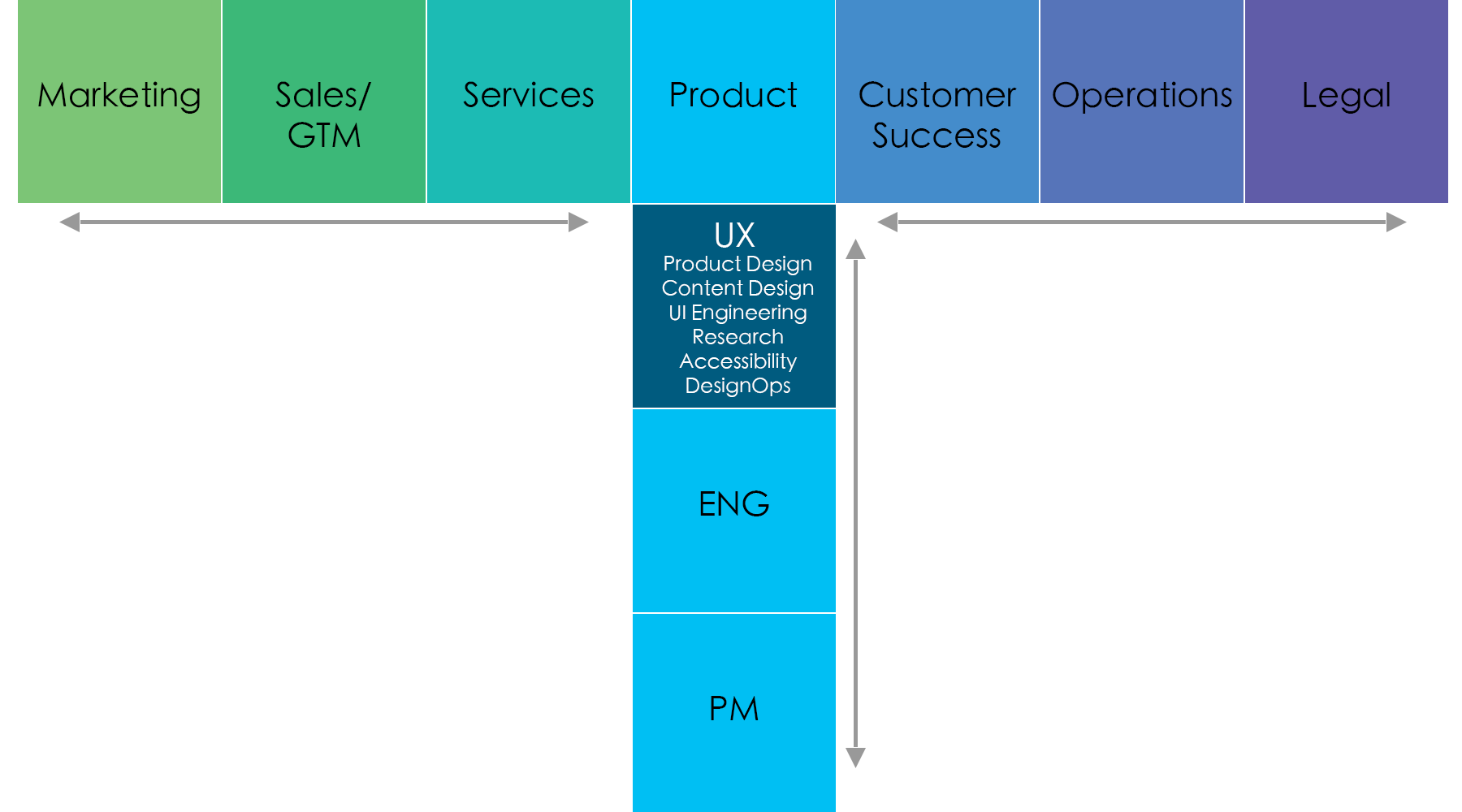
A T-Shaped Approach to Design in the Enterprise
I position design as both a delivery engine and connective tissue.
Vertically, design is embedded within the product value stream alongside Product Management and Engineering. This is where ownership lives. Design is accountable for shipping, for quality, and for outcomes. Deep craft matters here: UX, product design, research, design systems, content, accessibility, and AI-augmented workflows all serve the goal of delivering value to customers.
Horizontally, design operates across the enterprise. It partners with marketing, GTM, data, services, and customer success to align experiences, narratives, and decisions. This horizontal reach helps organizations make sense of complexity and move with confidence.
This T-shaped model avoids a common failure mode. Design is neither isolated nor ornamental. It ships vertically and aligns horizontally. The result is stronger products, faster alignment, and experiences that feel intentional rather than accidental.